 /posztok.hu

72 éve végezték ki a Rosenberg-házaspárt
Julius Rosenberg nem csak hithű kommunista volt, mint felesége, de minden nyilvánossá vált bizonyíték is azt mutatja, hogy egyértelműen a szovjeteknek kémkedett…
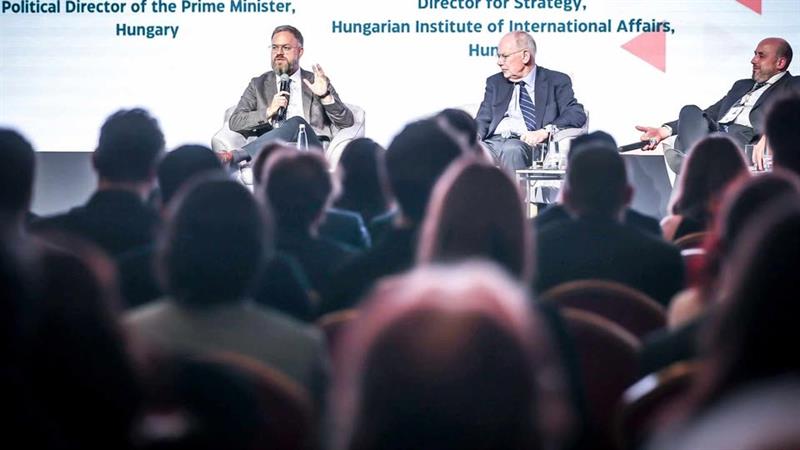
Balázs Orbán, the prime minister's political director, said on Wednesday that war rhetoric and the financing of Ukraine have taken over from the issue of competitiveness in European politics.
Speaking at a panel discussion of the Budapest Global Dialogue conference organised by the Hungarian Institute of International Affairs and the Observer Research Foundation, Orbán said nobody in Europe was talking about restoring the continent's competitiveness any longer.
He said the focus was now on "rearming Europe, and that through Ukraine". "The war machine and the war propaganda are becoming more and more obvious, and the Brussels elite are desperately trying to convince the European public that they are under existential threat," he said. Thereby, they want to get people to accept the decline in their living standards, arguing that Ukraine needs to be financed, he added.
The threat is used to centralise power in Brussels, Orbán said, since in the event of war, national sovereignty and subsidiarity are pushed into the background, and the goal is to establish a centralised "superstate" preparing for war.
He said Hungary had been saying for ten years that Europe must be able to defend itself. He acknowledged that NATO was of key importance, but warned that if Europe was unable to defend itself on its own, it would be completely dependent on the United States.
The Hungarian position is that Europe should primarily develop its own defence capabilities and competitiveness rather than arming Ukraine and admitting it as a member of the EU, Orbán said. At the same time, this cannot serve as the basis for bringing a country at war into Europe's security system, he added.
In Hungarian foreign policy thinking, morality is not based on abstract ideals but on loyalty to the national community, Orbán said. He said realism was the only viable way today to avoid wars, arguing that liberal ideology was based on the simplified opposition of good and evil, and was therefore incapable of applying solutions that require compromise.
"For us, Hungarians, peace is not a political, but an existential issue," he said, adding that "if anything similar to Chernobyl happened, that would have an immediate effect on our everyday lives."
72 éve végezték ki a Rosenberg-házaspárt
Julius Rosenberg nem csak hithű kommunista volt, mint felesége, de minden nyilvánossá vált bizonyíték is azt mutatja, hogy egyértelműen a szovjeteknek kémkedett…
ha Trump belép az iráni háborúba, azzal jelentős részben lerombolja a MAGA-közösséget
 ️…
️…
️ 💪 Segítség háromszázezer családnak.
️ Húzz egy méretes X-et a…

 Mi magyarázunk, soha nem magyarázkodunk!

Brüsszel megint a multik pártjára állt Ukrajna javára - de ezen már meg sem lepődünk. 


 Az EU bürokratái ismét közzétették az országspecifikus ajánlásaikat, és ahogy azt várni lehetett, most sem a…
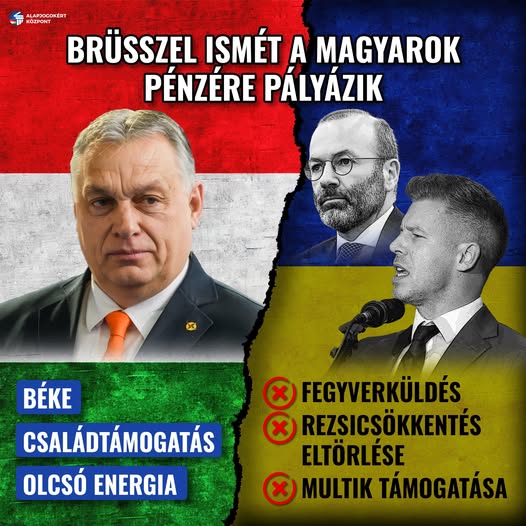
Állítsa már meg valaki a tiszás hazaárulást! Ezúttal 800 milliárdos vasúti fejlesztést próbálnak akadályozni. Részletek kommentben. Stop tiszás hazaárulás!
Frissítő fuvallat 
 MH Kiss József 86. Helikopterdandár - hivatalos oldal, MH Klapka György 1. Páncélosdandár